Spirituality at Rushwick
What is Spirituality?
At Rushwick we understand spirituality as a sense of awe and wonder; a sense that there is someone or something more than ’just me’; a sense of something indescribable. Spiritual development is not about becoming more spiritual. It is about realising or becoming more and more aware of one’s natural, innate spirituality. This is sometimes a slow, gradual process, at other times there might be significant stages of realisation. In childhood, spirituality is especially about being attracted towards or responding to a call to relate to more than ‘just me’ – i.e. to others, to God, to creation or to a deeper inner sense of self.
Why Spirituality is important at Rushwick
All human beings are spiritual people. This is the way God has made us. Children are not only no less spiritual than adults, they are often, it appears, more open to their spiritual reality. There is a rich natural spiritual capacity of childhood – spirituality as something ‘already there’ to be cherished. This means learning to view spirituality as something we expect in every child. Taking spirituality seriously in children helps us to embrace the reality that children are made in God’s image and that they are already spiritually switched on.
Spirituality at Rushwick
We recognise that spirituality is an important part of who we are and that it may be experienced and expressed in different ways. Our shared understanding of spirituality is rooted in and shaped by our theologically rooted vision, which guides how we understand ourselves, our relationships with others and our place in God’s world. We use this document to support the articulation of our shared understanding of spirituality, and how it relates to our theologically rooted vision:
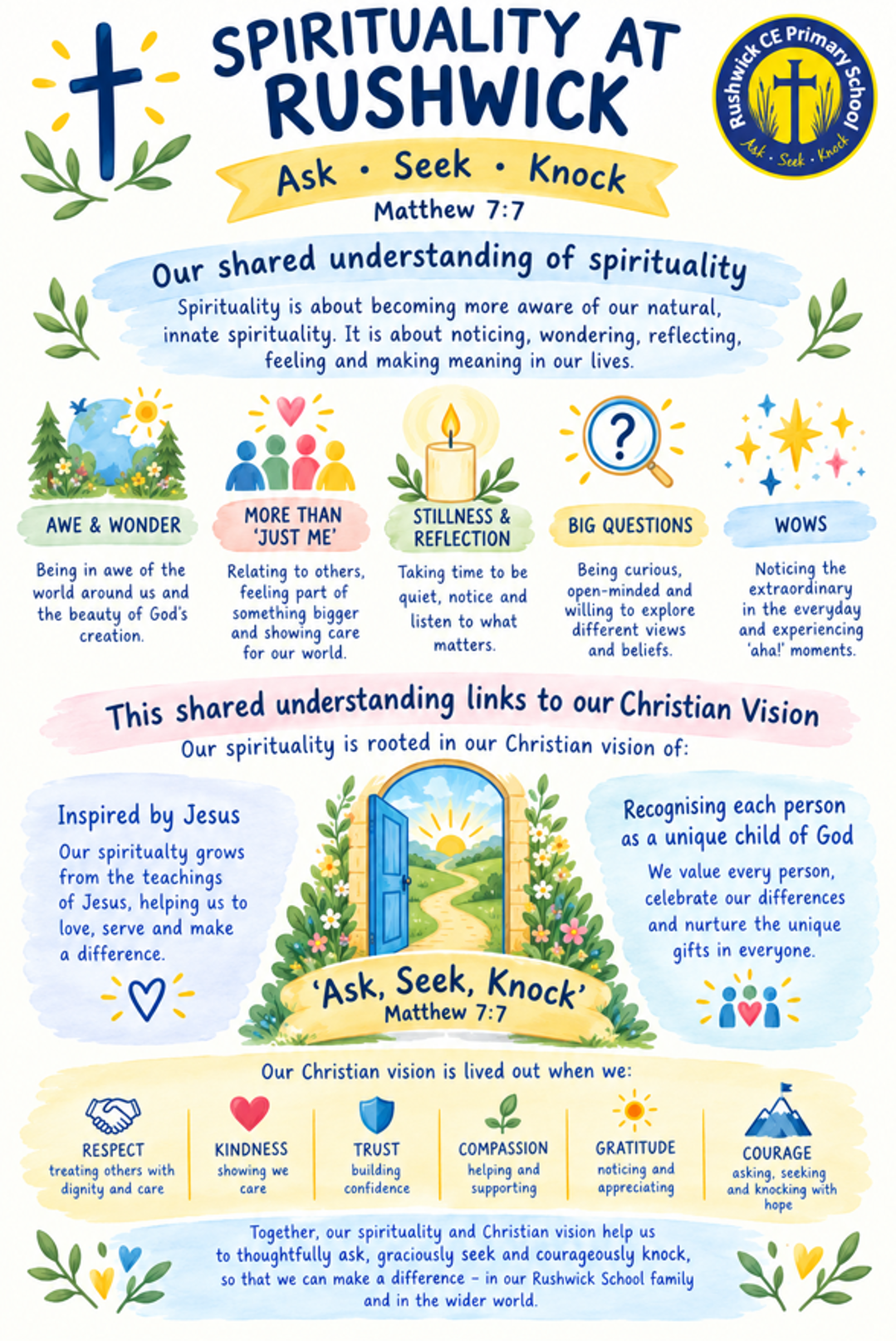
Through our vision and everyday school life, we create opportunities for everyone to pause, wonder, ask questions, grow in faith and understanding, and flourish spiritually.
Our Pupils' Spiritual 'Diet' at Rushwick
Across the Curriculum
Teachers intentionally create opportunities for pupils to explore big questions, ‘I wonder…’ moments, awe and wonder, and questions of meaning and purpose. These opportunities enable children to pause, reflect and make connections between their learning, their own experiences and the wider world.
To deepen this approach, Science, Geography and History lessons now include carefully planned ‘Connect and Reflect’ questions each week. These questions invite pupils to look beyond knowledge and facts, encouraging them to reflect, question, make connections, consider different perspectives and develop a deeper sense of themselves, others and the world they inhabit.
Through these deliberate opportunities, spirituality is not seen as something separate from the curriculum, but as an integral part of learning. Pupils are encouraged to develop curiosity, encounter awe and wonder, explore questions of meaning and purpose, and reflect on their place within God’s world. In this way, the curriculum provides rich and authentic opportunities for spiritual development and growth, enabling pupils to develop the habits of reflection, thoughtful questioning and openness to experiences that may transform their understanding of themselves and the world around them.
Stillness and Reflection
Alongside the planned opportunities for stillness within our acts of worship, pupils experience two intentional moments of stillness and reflection each day.
Before lunch, children are invited to ‘pause’ for one minute, creating a calm space to be still, gather their thoughts and reflect before saying our school prayer and moving to lunch.
At the end of the school day, following the class novel, children engage in two minutes of end-of-day stillness, reflecting quietly on the question, ‘What have I learnt about myself today?’
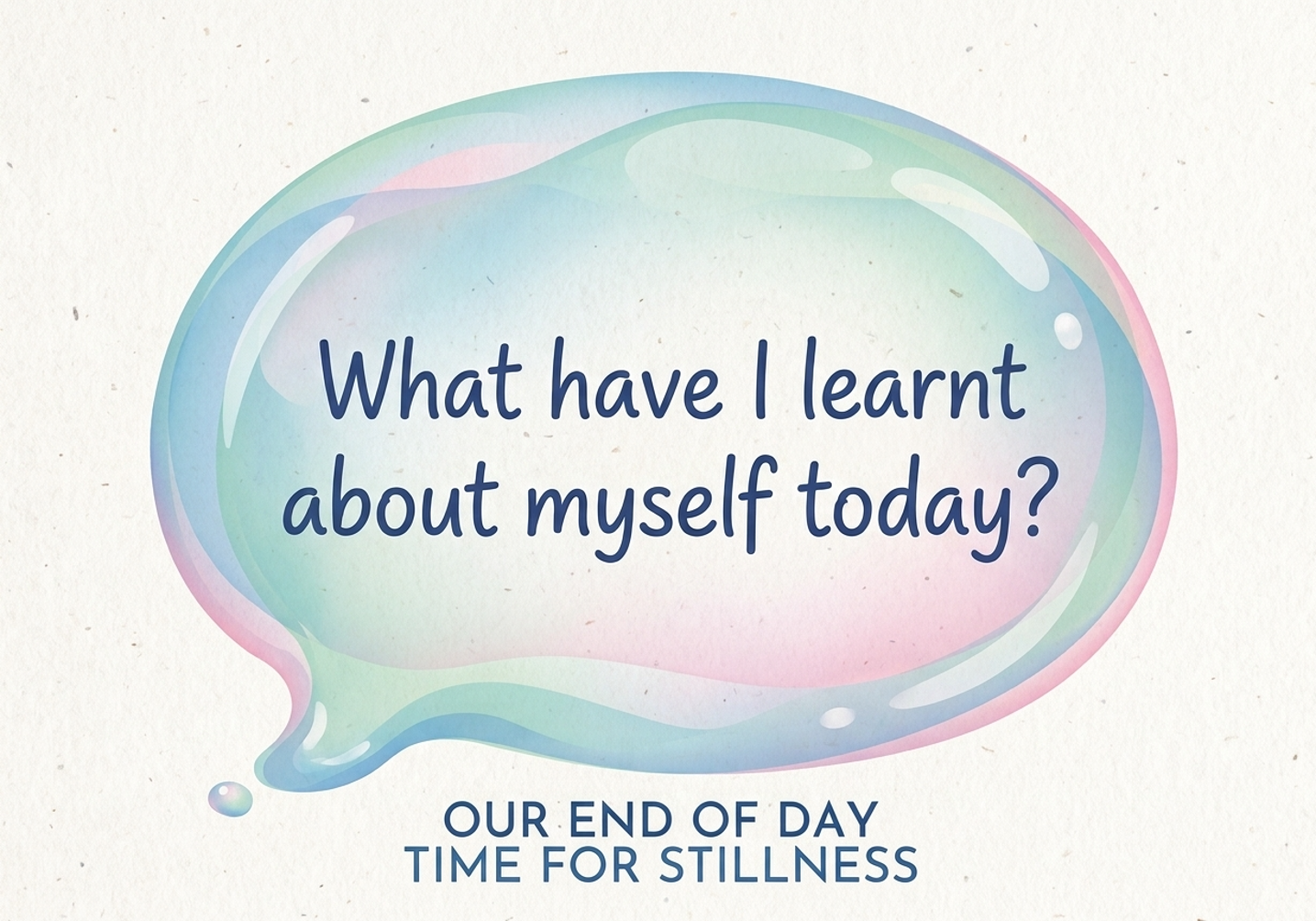
These regular moments of pause provide children with valuable opportunities to slow down, be present, reflect on their experiences and develop an awareness of themselves, others and the world around them. In doing so, stillness becomes a meaningful and embedded part of our school culture and supports pupils’ ongoing spiritual development.
Wider Opportunities
We recognise that spiritual growth is nurtured not only through the taught curriculum and worship, but also through belonging, participation, service and a sense of being part of something greater than ourselves.
Children have extensive opportunities to contribute to the life of our school and wider community through pupil leadership roles such as House Captains, School Council, Worship Leaders and Wellbeing Champions; representing the school at sporting events; participating in a wide range of after-school clubs; and engaging with the Archbishop of Canterbury’s Young Leaders Award in Y4/5.
These experiences enable pupils to develop meaningful connections with others, discover their own strengths and responsibilities, and recognise the contribution they can make to the lives of others. Through opportunities to serve, lead, collaborate and act justly, children develop an increasing understanding of their responsibility towards others and the wider world, fostering a sense of belonging and purpose that extends beyond themselves.